
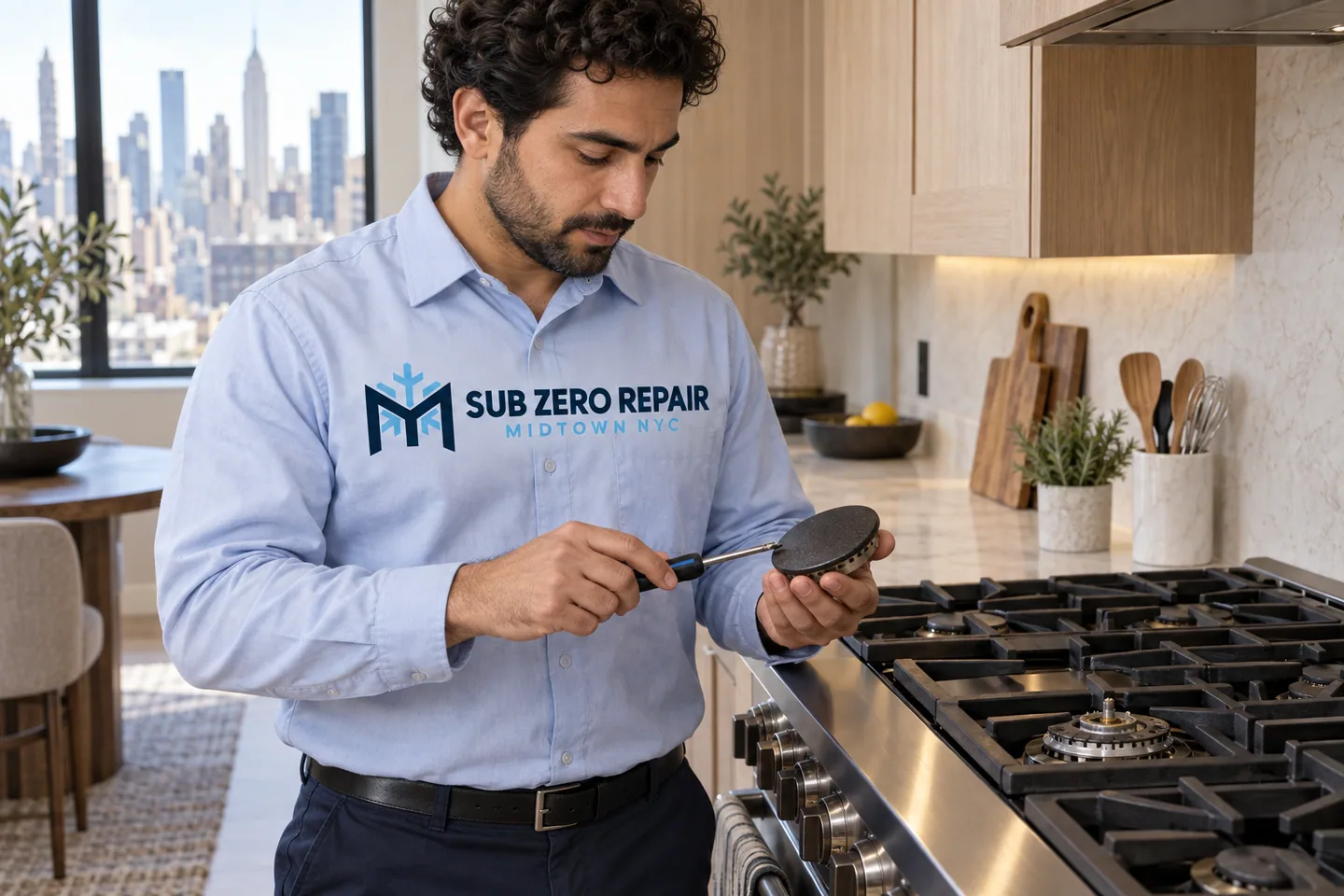
Identify which burner is affected and note recent cleaning or service. Do not bypass ignition or attempt gas adjustments.
What to note before calling
| What you notice | Useful next step |
|---|---|
| One burner differs | Record its position and the behavior you already observed. |
| The concern followed cleaning | Mention the timing. Follow only the cleaning and reassembly instructions for the exact model after it is cool. |
| Gas odor or abnormal operation occurs | Leave the area and contact the utility or emergency services from a safe place if gas is suspected. |
Use the owner guidance for the installed model
Viking’s documentation library organizes owner instructions by product. Select the actual range model before following cleaning or operating guidance. A manual for another range does not establish the correct procedure for the installed appliance.
Keep burner position and prior work in the account
Name the affected position and explain what happened during ordinary use. If cleaning or a service visit preceded the change, preserve that timing. Do not use another burner as a safety test when gas is suspected, and do not interpret a working oven as proof that the surface ignition system is sound.
When to stop owner checks
Do not repeatedly try to ignite a burner, use a flame to bypass a fault, move the connected range or adjust valves. If you suspect a gas leak, do not operate electrical switches. Manufacturer recall or warranty concerns should be checked directly with Viking.
A FEW HELPFUL ANSWERS
Before your service visit
Does a clicking burner prove the igniter needs replacement?
No. Clicking alone does not establish the cause. Record what happened and the model, and arrange assessment rather than attempting a gas or electrical repair.
Should I light a burner manually to get through the day?
Do not bypass an ignition fault with an external flame. Stop the repeated attempts and seek appropriate assistance; suspected gas leaks require contacting the utility or emergency services from a safe place.