
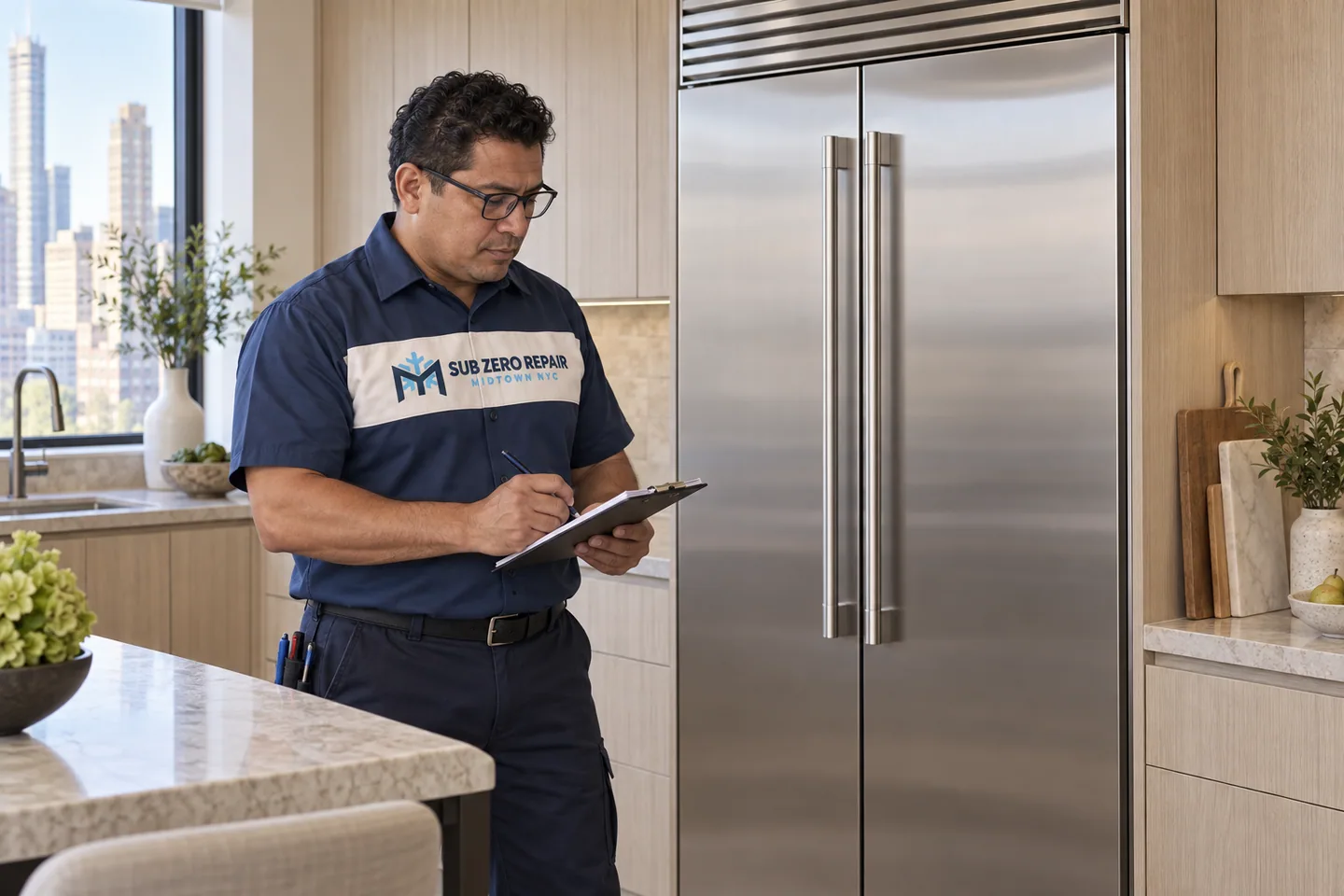
Note the point where movement changes
Does the door rub during its swing, stop just before closing or appear to reopen? Tell us what you have observed. Check for an obvious package in the way, but avoid adjusting hinges, mounting screws or decorative fronts.
Mention recent cabinet or flooring work if it preceded the change. The installation history matters, but the appliance still needs assessment before responsibility or a repair is determined.
Keep temperature details separate
Identify the fresh-food section, freezer or other affected compartment. Record the selected setting and any alert. If only one section seems different, say so instead of describing the entire refrigerator as warm.
A door concern may be relevant to the temperature problem, but it does not rule out other issues. Diagnosis should consider the actual model and behavior before any component is ordered.
Prepare access at your Sutton Place home
Clear movable items from the front and side of the approach. Leave the built-in refrigerator in its enclosure and tell us if a nearby cabinet limits opening. Discuss building entry, current availability and diagnostic charges by phone.
Make suitable alternative storage arrangements if cooling is unreliable. Neither a door adjustment nor an appointment confirmation should be assumed to establish the condition of stored food.
A FEW HELPFUL ANSWERS
Before your service visit
Should I remove the cabinet panel to improve closure?
No. Leave permanent panels and hardware in place until the installation is assessed. You can remove an obvious loose item blocking the door without altering the appliance.
Can a photograph show whether the hinges need replacement?
It may show the visible interference, but it cannot establish the full cause. The model, installation and movement need assessment.