
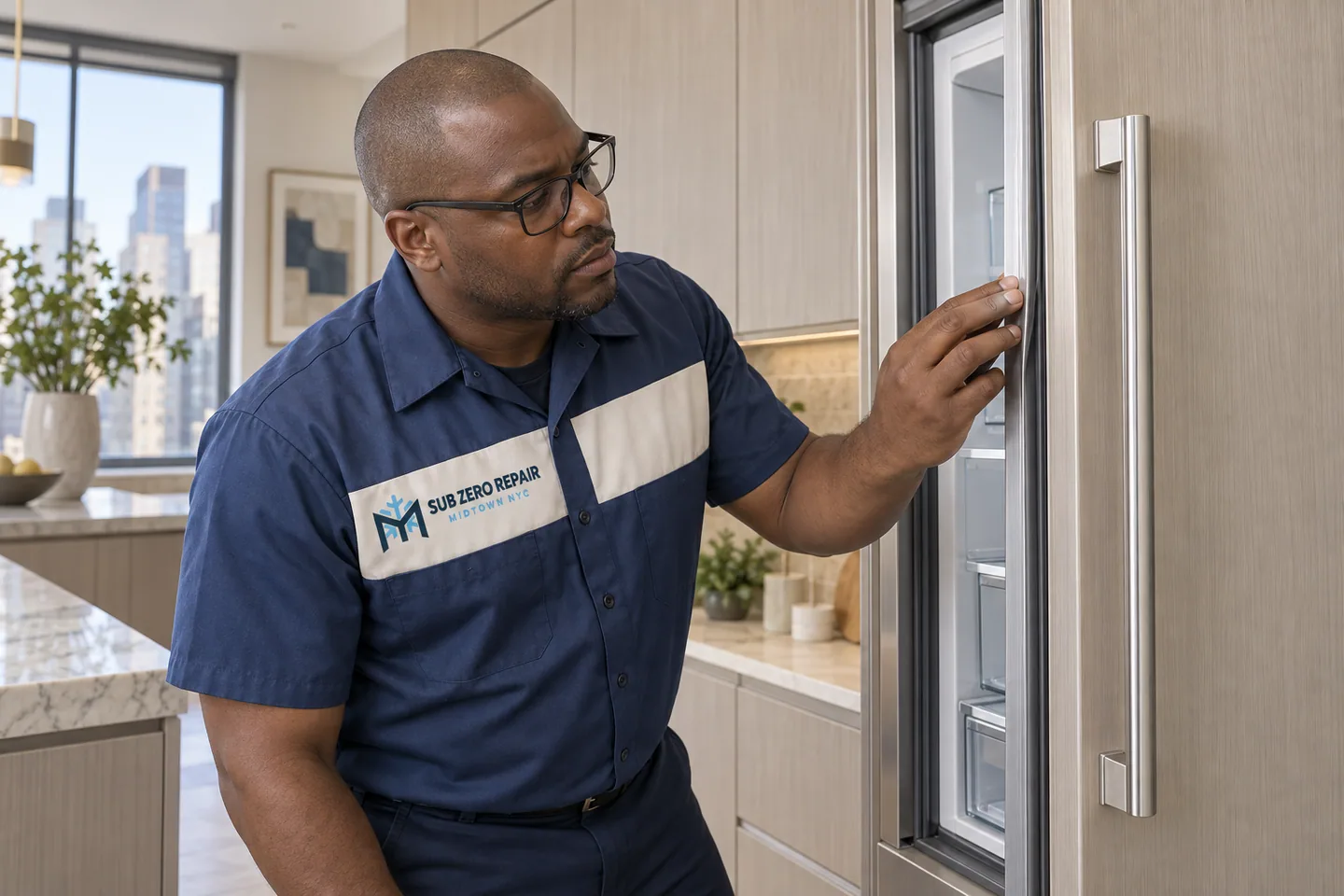
Identify the unit and the surface
In a paired kitchen installation, first establish whether the frost is in the refrigerator or a separate freezer. Tell us which door, drawer or interior area is affected. Include the model if it is available from a label or owner document.
Do not chip ice or apply heat to expose the area. Ask for model-specific guidance before defrosting, because changing the condition can remove information useful to the assessment.
Keep closure observations with the frost history
Mention a drawer that stops short, a panel that touches adjacent cabinetry or a package blocking the opening. Remove only an obvious loose obstruction. Leave door hardware, permanent panels and mounting points untouched.
If the issue followed cabinet work, a long period of nonuse or a power interruption, include that history. The timing helps explain the request without proving a particular cause.
Arrange a visit to the fitted kitchen
For your Sutton Place address, describe the space in front of the appliance and the building's entry arrangements. Clear movable items while keeping the refrigerator installed. We discuss availability and the diagnostic visit charge before confirming service.
If cold storage is unreliable, arrange an appropriate alternative for temperature-sensitive items. A frost photograph cannot determine whether food has been stored safely.
A FEW HELPFUL ANSWERS
Before your service visit
Should I remove the frost before the technician comes?
Keep a photo and discuss the exact model first. Avoid sharp tools, heat guns or an improvised defrosting procedure.
Does frost prove that the door gasket needs replacement?
No. The location and closure behavior help the assessment, but they do not identify a failed part on their own.