
Tell us what touches or resists movement
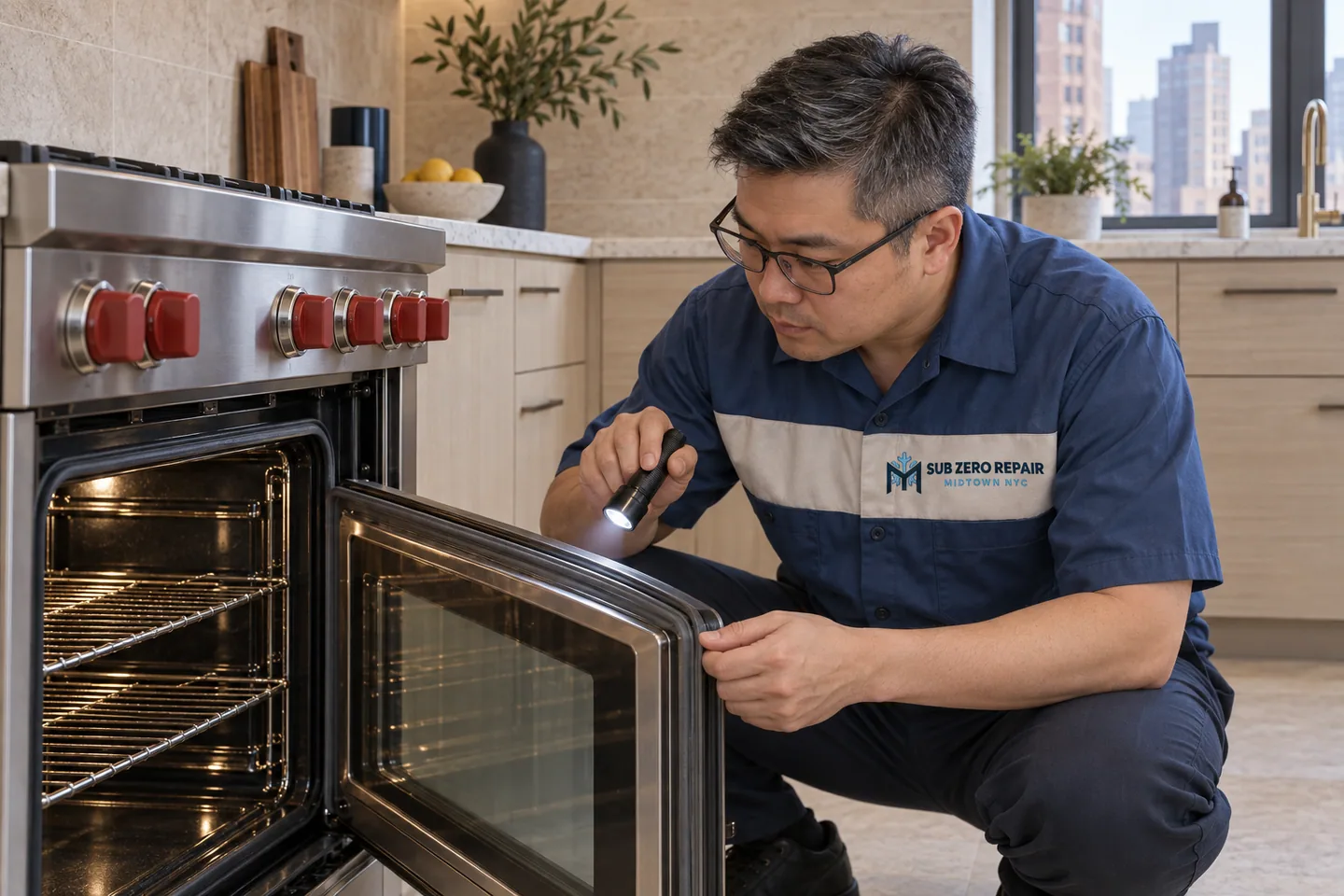
Does the oven door meet a nearby cabinet, fail to finish closing or feel different at the handle? Is a knob loose or obstructed? Report what you can observe from normal use. Do not force controls, remove the door or alter neighboring cabinetry to test a theory.
If flooring or cabinets were recently changed, include the timing. Keep the appliance's model and any installation paperwork available so the actual range can be identified.
Add the cooking details
Explain the selected oven mode, cavity and point at which the problem occurs. For surface cooking, identify the burner or zone. A range may combine different heating systems, so a working surface does not diagnose an oven fault.
Stop use if there is overheating, smoke, sparking or suspected gas leakage. For suspected gas odor, leave the area and contact the utility or emergency services from a safe location without operating electrical switches.
Protect the fitted kitchen during access planning
Leave the range connected and in place. Clear stools, mats and other loose items from the approach, and let the appliance cool before the appointment. Tell us about tight clearances when calling rather than expecting the resident to create access by dismantling furniture.
For a Sutton Place visit, the address, building instructions and current availability are confirmed together. Repair options follow assessment, not a photograph of the door alone.
A FEW HELPFUL ANSWERS
Before your service visit
Could a door problem affect the oven's operation?
It may be relevant, but the visible condition does not settle the diagnosis. Report the closure concern and cooking behavior together for assessment.
Can I pull the range forward a few inches before the visit?
Leave it in place. Connections and installation restraints need to be considered before a connected range is moved.