
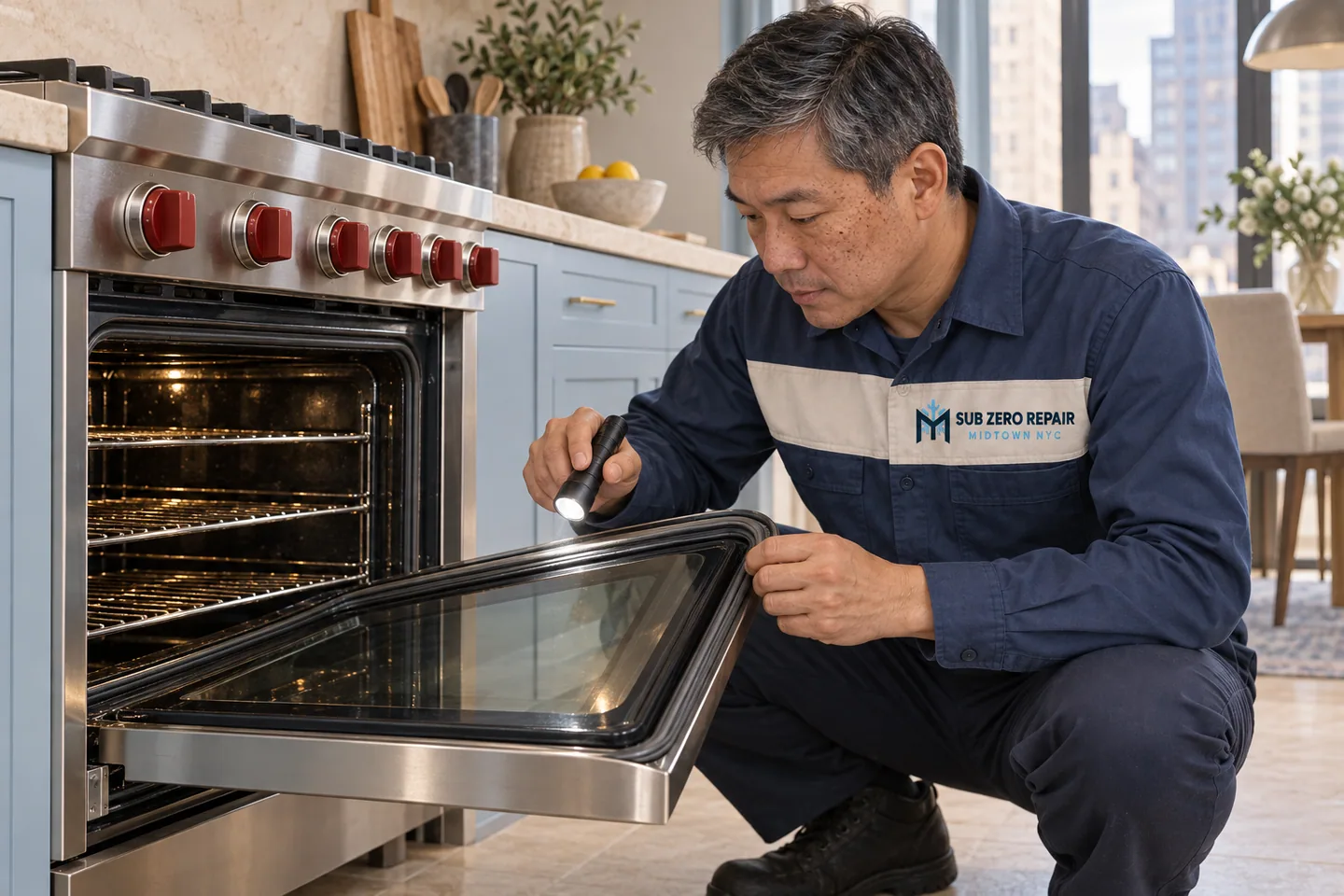
Name the cavity and cooking mode
Tell us whether you used the smaller or larger oven and which mode was selected. Describe whether it never heated, stopped during preheat or changed later in cooking. If the range has only one oven, the same timing details are still useful.
Add any surface-cooking problem separately. A burner or induction zone is not part of the same symptom simply because it shares the range cabinet.
Avoid testing by substitution
Do not keep moving food between cavities to judge a malfunctioning oven, especially if overheating, smoke or an electrical smell is involved. Stop use when operation is unsafe. Let the equipment cool and preserve any message you already observed.
The exact model helps distinguish the cooking configuration and appropriate owner information. Width, knob color and an adjacent Wolf appliance are not reliable substitutes for the range's identifier.
Fit the visit to the Turtle Bay property
Share the building's actual service hours and any elevator booking process. If the appointment must end before a fixed access cutoff, discuss that constraint before reserving it. The technician also needs a clear approach to the cooled range.
Ask about the assessment charge when calling. Recommended repairs and parts are discussed after diagnosis, with the person authorized to approve the work.
A FEW HELPFUL ANSWERS
Before your service visit
Can the working oven prove the range's supply is fine?
It does not establish the condition of every function or connection. Report the contrast and let the model-specific assessment determine its significance.
Should I remove the range door to make access easier?
No. Leave doors and installation hardware in place unless appropriate model-specific service instructions are being followed by the person performing the work.