
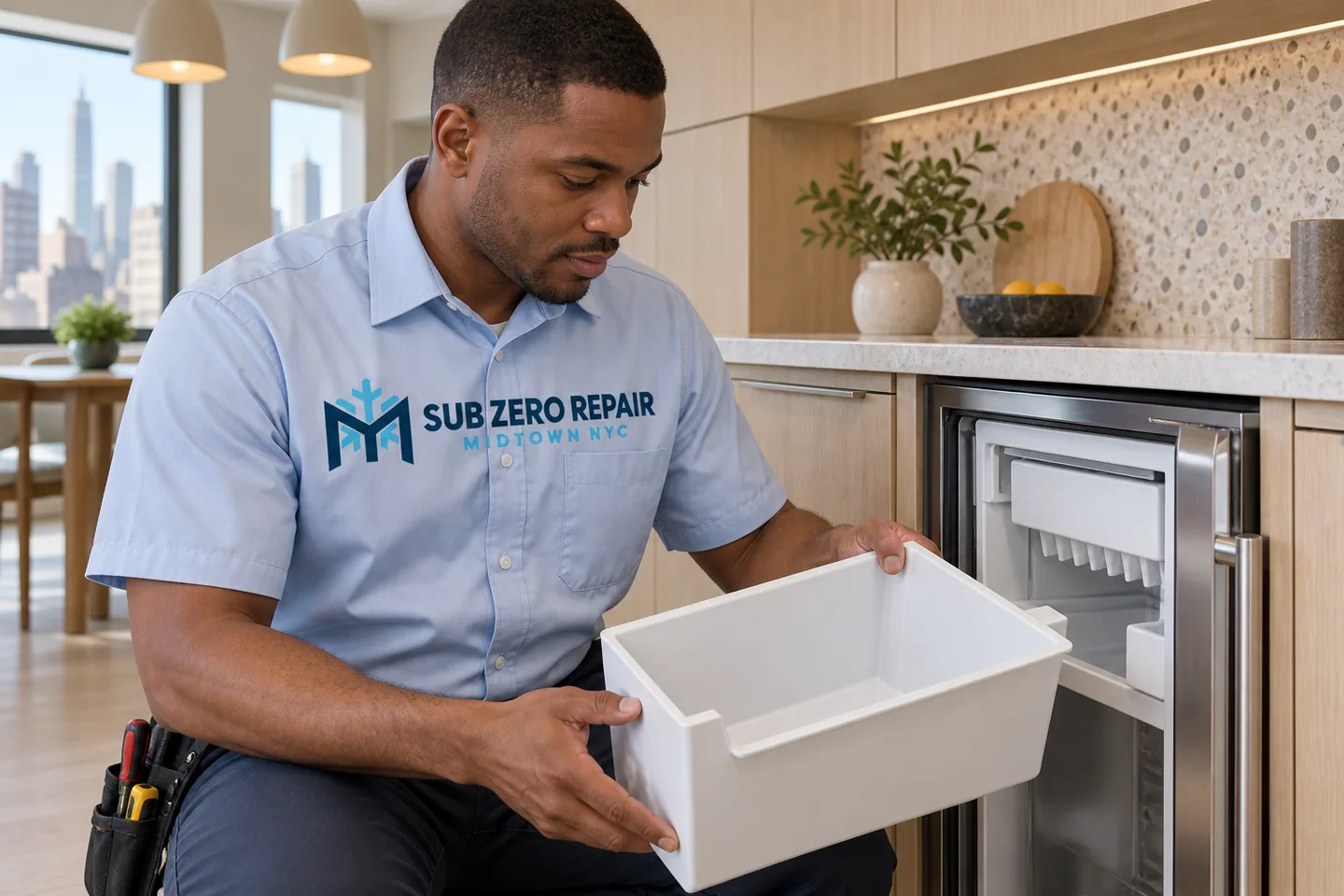
Describe the equipment around the ice
For an integrated unit, include the freezer's behavior and any temperature concern. For a standalone appliance, provide its own model rather than the refrigerator's identifier. Similar-looking ice complaints can involve different equipment and conditions.
Note whether ice is absent, clumped, unusually shaped or accompanied by water. Avoid forcing a stuck mechanism or repeatedly operating it to reproduce the problem.
Include recent changes to the water history
A filter replacement, plumbing visit or interruption to the water supply can be relevant. Keep the timing and any paperwork available. None of those events alone proves that a valve, filter or ice-making component has failed.
Follow only the owner-accessible maintenance guidance for the exact product. Do not disconnect concealed lines, open electrical covers or pull a built-in machine out to inspect it.
Discuss the visit before making a parts purchase
A model number helps identify the appliance, but the diagnosis determines the proposed repair. Ask about diagnostic charges and current scheduling when you call 212-540-2172.
For a Midtown apartment, mention entry requirements and access to the front of the unit. If water is actively leaking, stop use and arrange appropriate assistance rather than waiting for ice production to reveal more information.
A FEW HELPFUL ANSWERS
Before your service visit
Does less ice always mean the ice maker itself is broken?
No. The type of appliance, surrounding compartment conditions and relevant supply history need assessment before a component is blamed.
Can I request ice-maker service if refrigerator cooling seems normal?
Yes. Explain the ice concern and report cooling separately. Include the full refrigerator model if the ice maker is integrated into it.