
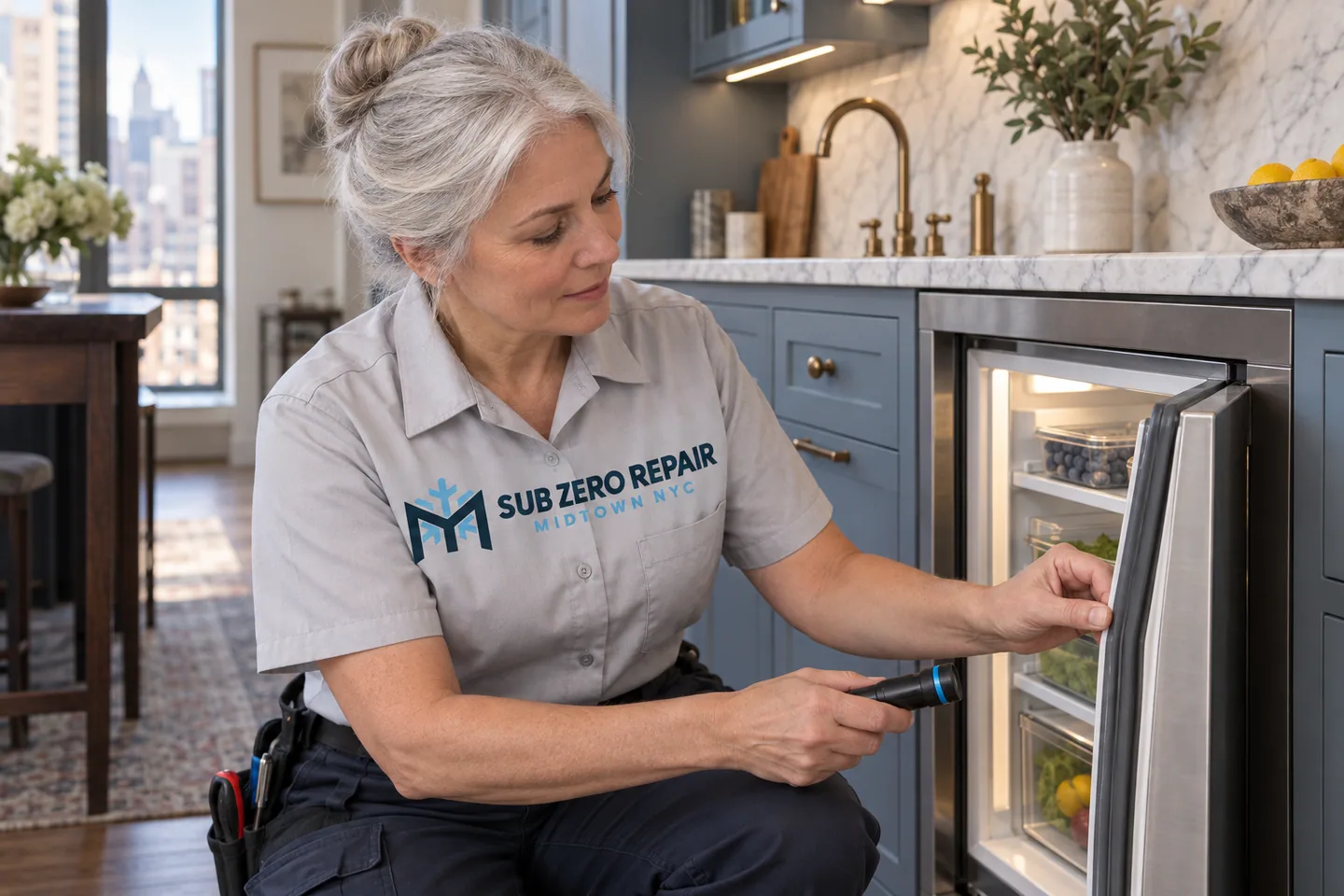
Start at the opening that changed
Tell us whether one drawer behaves differently, both compartments are affected or the control shows a message. Include rubbing, resistance or a loose obstruction in the closure path as separate observations.
Do not force a loaded drawer or adjust its front to improve the temperature. Keep permanent panels, tracks and installation hardware in place until the unit is assessed.
Explain what surrounds the refrigerator
An island installation, closely fitted cabinets or a recent flooring change can affect access. Describe the layout by phone and clear movable items from the front. Leave the appliance connected and below the counter.
If the model label is not safely visible, existing manuals or purchase documents may help identify it. The drawer finish or the dimensions of the adjacent cabinet are not sufficient to select parts.
Keep compact refrigeration in the right category
This service concerns undercounter storage designed for chilled food or beverages. Dedicated wine storage and standalone ice production have separate service pages. If you are unsure which category fits, explain what the appliance stores and how its controls are labeled.
Call to check your Midtown address and availability, and ask about the diagnostic charge. Arrange appropriate alternative storage if cooling cannot be relied on while the visit is being organized.
A FEW HELPFUL ANSWERS
Before your service visit
Should I slide the unit out because it is small?
No. Compact built-in equipment can still have concealed connections and mounting points. Access should be assessed before movement.
Is one warm drawer enough to identify a sensor fault?
No. The compartment behavior, closure, installation and model need to be considered before recommending a particular repair.