
Keep each zone's information separate
Record the selected setting and any displayed reading for the zone involved. If another zone seems normal, include that distinction. Do not apply a household food-refrigerator target to wine storage or use settings from another model's instructions.
Describe whether the concern is temperature, condensation, an alert or a new operating sound. A working interior light does not establish that the storage conditions are correct.
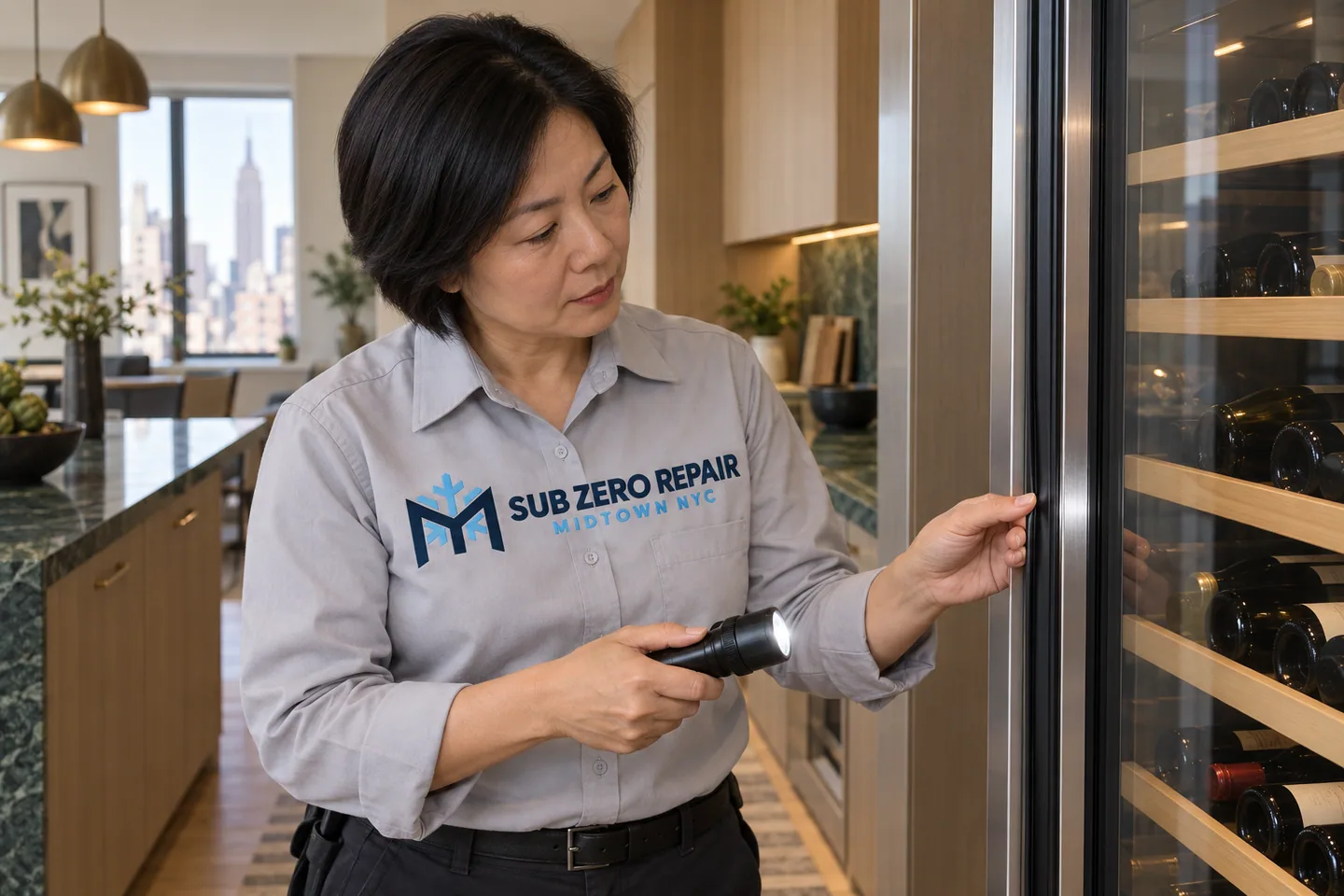
Notice the door without adjusting it
Tell us if bottles interfere with normal closure, a door rubs or a decorative panel has recently been changed. Clear a loose obstruction only when it is safe and straightforward. Leave mounting hardware and cabinet fronts untouched.
A glass door, nominal width or matching kitchen finish cannot reliably identify the cooling equipment. Use a safely accessible label or the unit's original paperwork instead.
Plan access to a loaded cabinet
You do not need to empty every shelf simply to call. Explain the installation and ask what preparation is appropriate for the proposed visit. If storage conditions are unreliable, consider a suitable alternative for the contents while service is being arranged.
For Midtown appointments, building entry and access requirements are reviewed along with availability. Discuss the assessment charge and any proposed work before authorizing repair.
A FEW HELPFUL ANSWERS
Before your service visit
Should I set every zone to the same temperature to test it?
Keep the original settings and observations available. Use the owner's guidance for the exact model rather than changing all zones as an improvised diagnostic test.
Is a wine cabinet the same repair category as a beverage drawer?
Dedicated wine storage has its own operating purpose. Tell us what the unit is designed to store and provide its model so the appropriate service can be discussed.