
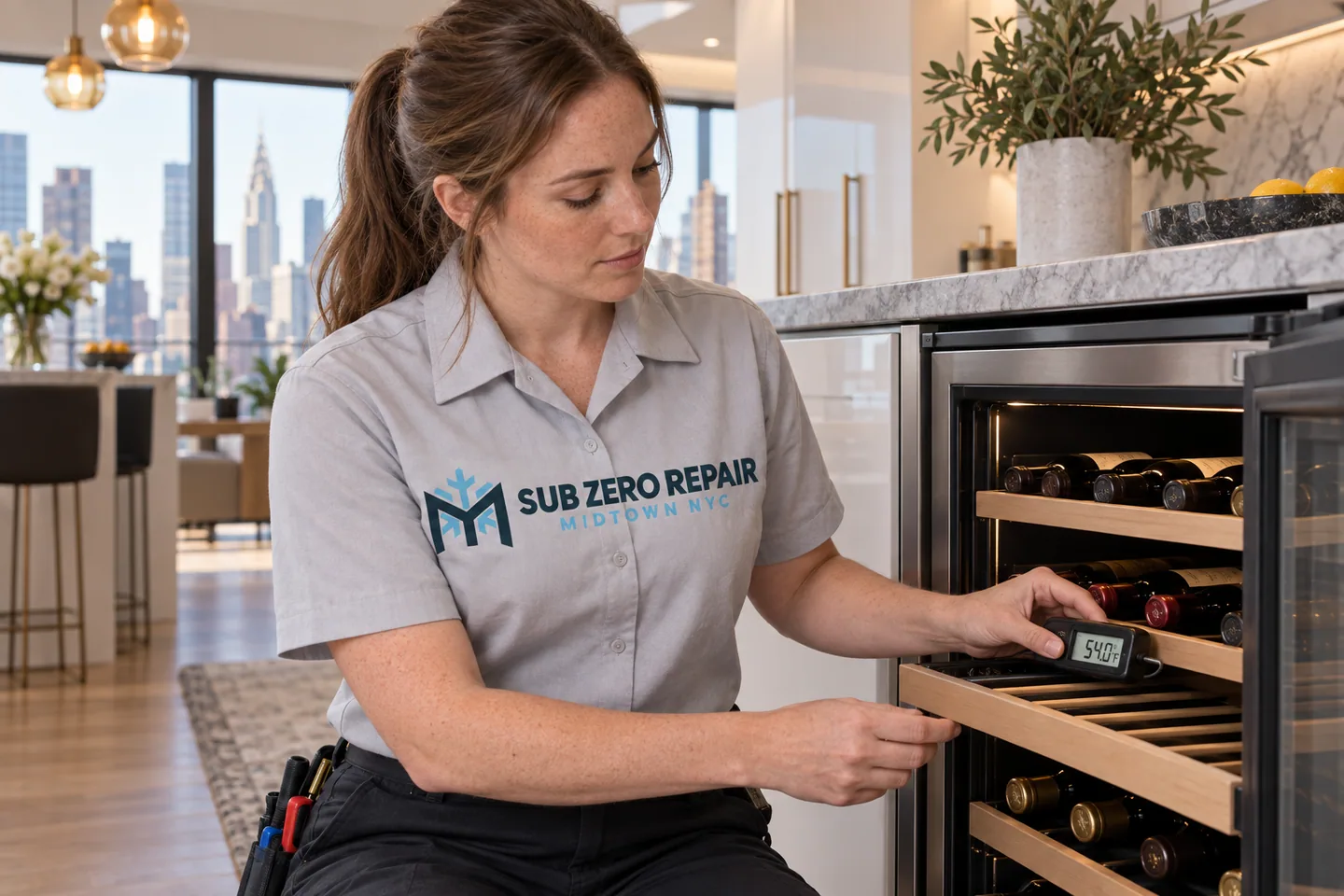
Keep a useful temperature history
Say whether the concern is new, intermittent or present since installation. If another zone appears unchanged, include it as a separate observation. Avoid lowering all settings at once; that makes the original condition harder to describe.
Wine-storage instructions should come from the model's documentation. A food-refrigerator temperature target is not a substitute for the correct wine-cabinet guidance.
Notice moisture and closure independently
Condensation on glass, moisture near an opening and a door that catches are different details. Mention recent changes to shelves, bottle placement or surrounding cabinetry. Leave hinges and panels untouched and move only an obvious loose obstruction.
Explain whether the cabinet has a glass or solid front and how much space is available for its door to open. These are access details, not a way to infer the internal cooling system.
Discuss the collection and the visit
If storage conditions are unreliable, consider a suitable alternative for the contents. Ask what should be cleared for the assessment before emptying a loaded cabinet unnecessarily. Call 212-540-2172 to review the Midtown location, availability and diagnostic charges.
A FEW HELPFUL ANSWERS
Before your service visit
Can one zone need attention while the other appears normal?
Report each zone separately. Uneven behavior is useful information, but it does not identify a replacement component by itself.
Is an undercounter beverage refrigerator the same category?
Identify the unit's intended use and model. Dedicated wine storage and general beverage refrigeration should not be assumed to share settings or service information.