
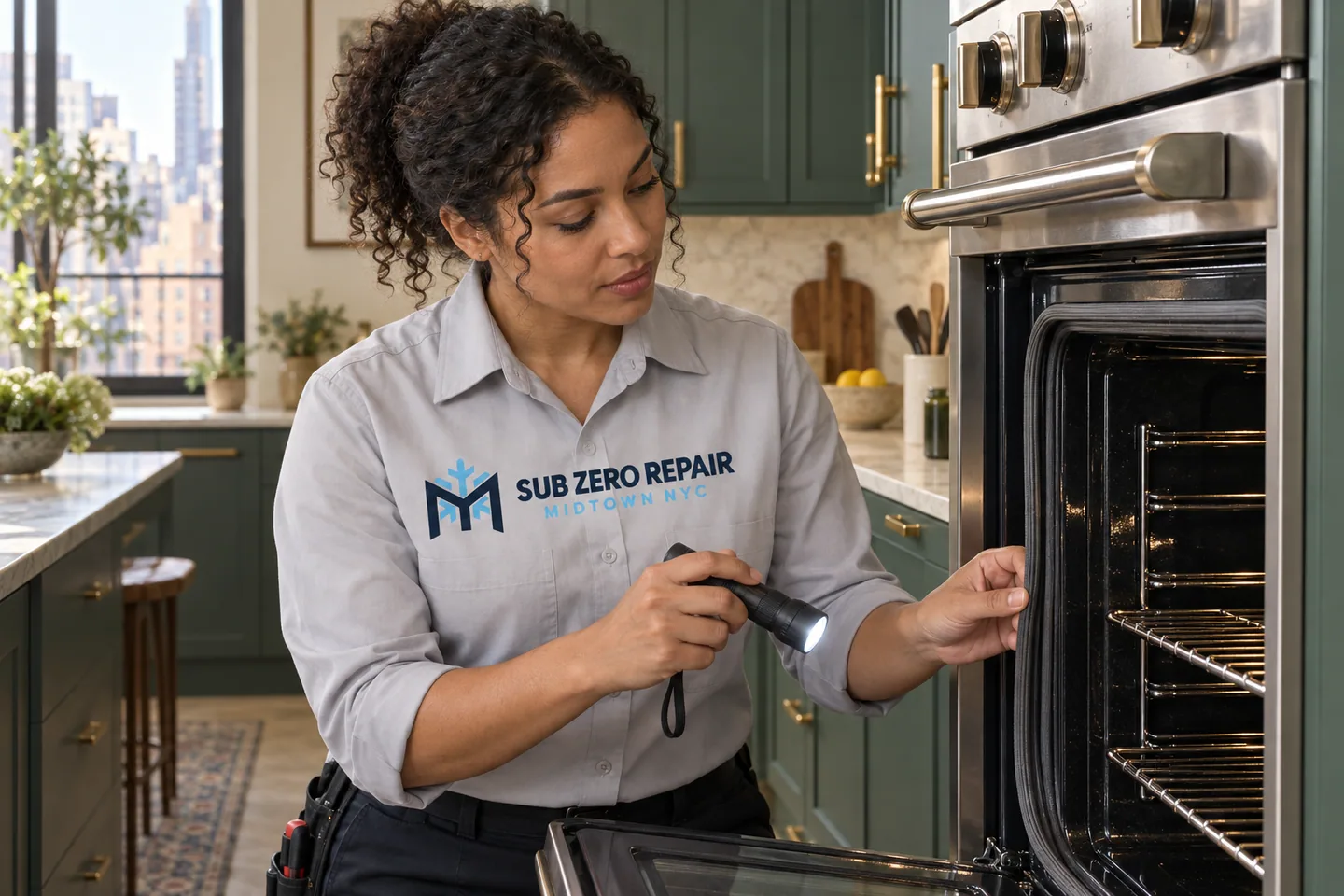
Separate the cavity from the cooking setting
In a double oven, identify upper or lower. Record the setting in use and whether a message appeared. A comparison from normal use is helpful; you do not need to run additional cycles on an appliance showing an unsafe condition.
If the complaint is uneven results, include the rack position and whether the same recipe previously behaved differently. One disappointing dish is not enough to establish an oven calibration fault.
Leave cleaning and resets out of the experiment
Self-clean is not a repair method. Tell us if the problem began during or after that cycle, and leave a stuck latch alone. Repeated resets can clear information without resolving the underlying condition.
Allow the oven to cool and leave it supported in its cabinet. Do not remove trim or reach inside an electrical enclosure to investigate a no-heat complaint.
Prepare a built-in service visit
Mention a matching appliance installed above or below the oven and any limited clearance. These details help discuss access without promising that removal will be needed. Call 212-540-2172 to review availability at your Midtown address and the assessment charge.
A FEW HELPFUL ANSWERS
Before your service visit
What if the oven sits beneath burners in one appliance?
That is a range configuration. Use the Viking range service page so the combined appliance and fuel system are identified correctly.
Should I order a temperature sensor from the error code?
Keep the code, but do not treat it as a parts instruction. Its meaning and the necessary checks depend on the exact model.