
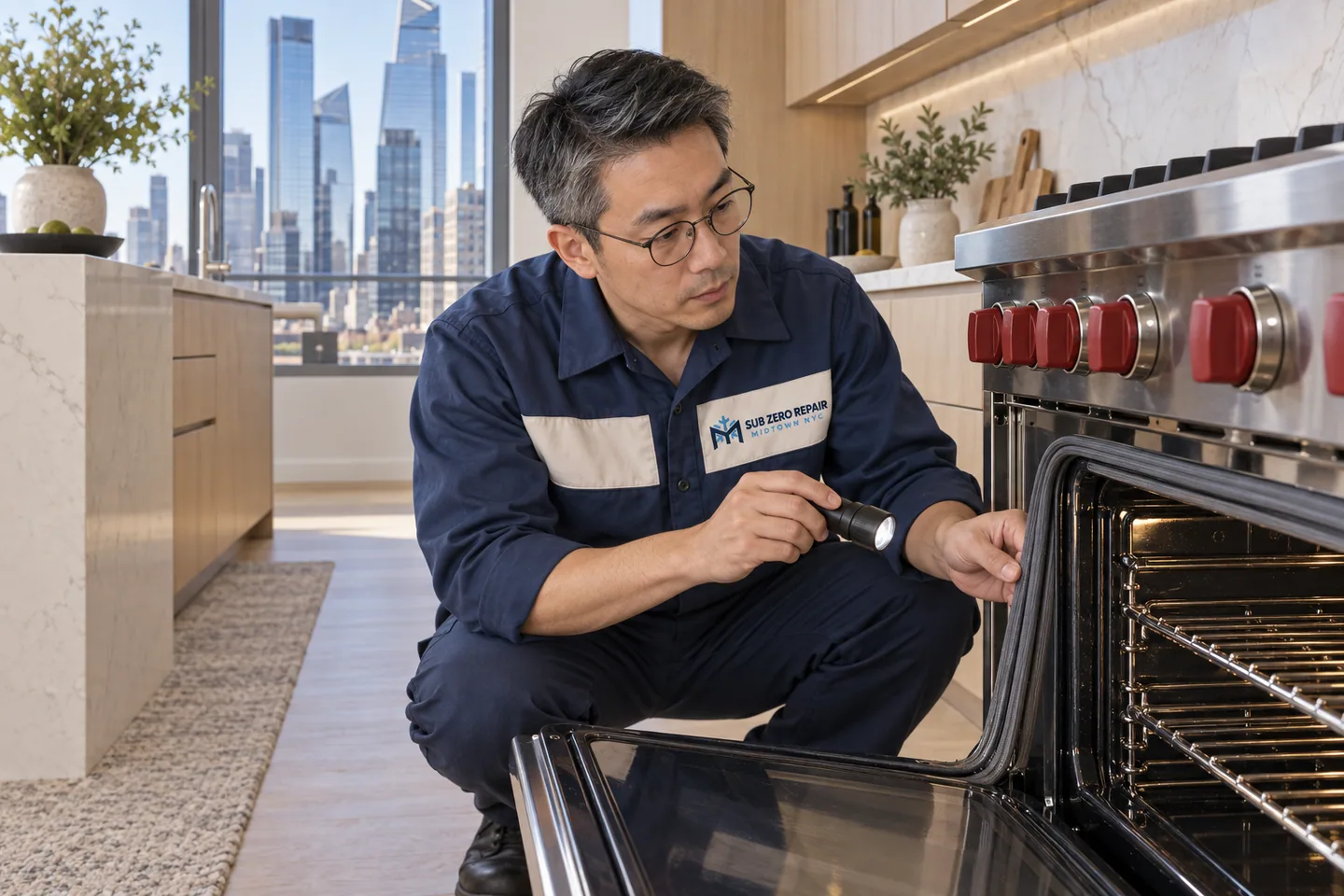
Tell us which cooking system is installed
Wolf range configurations differ. Use the model information or owner documents to identify gas, dual-fuel or induction equipment. Avoid diagnosing the whole appliance from the fact that a knob turns, a light works or a burner ignites.
For an oven complaint, include the selected mode and whether it begins preheating, stops partway through or behaves differently once food is inside. Record a message before it disappears, but do not keep running a malfunctioning appliance to collect evidence.
One cavity or both?
If the range has two ovens, identify the affected cavity and what you already know about the other. The smaller oven is not simply a duplicate diagnostic reference for the larger one. Their behavior should be described independently.
Tell us about a recent power interruption, installation or cleaning cycle if it preceded the change. Timing helps frame the problem; it does not establish a failed component.
Coordinate access and a cool work area
Before a Hudson Yards visit is confirmed, review any building registration or service-elevator requirements. Let the oven and surface cool, and leave the range connected and in place. An assessment of the installation comes before any movement.
Ask about the diagnostic visit charge when scheduling. Any repair recommendation and parts availability are discussed after the appliance is assessed.
A FEW HELPFUL ANSWERS
Before your service visit
Does normal burner operation rule out an electrical problem?
No. On a dual-fuel range, normal gas surface cooking does not explain the electric oven's condition. The exact model and affected function need assessment.
Should I reserve a service elevator immediately?
First discuss availability and the building's rules. A reservation should match a confirmed appointment, not an unconfirmed preferred time.