
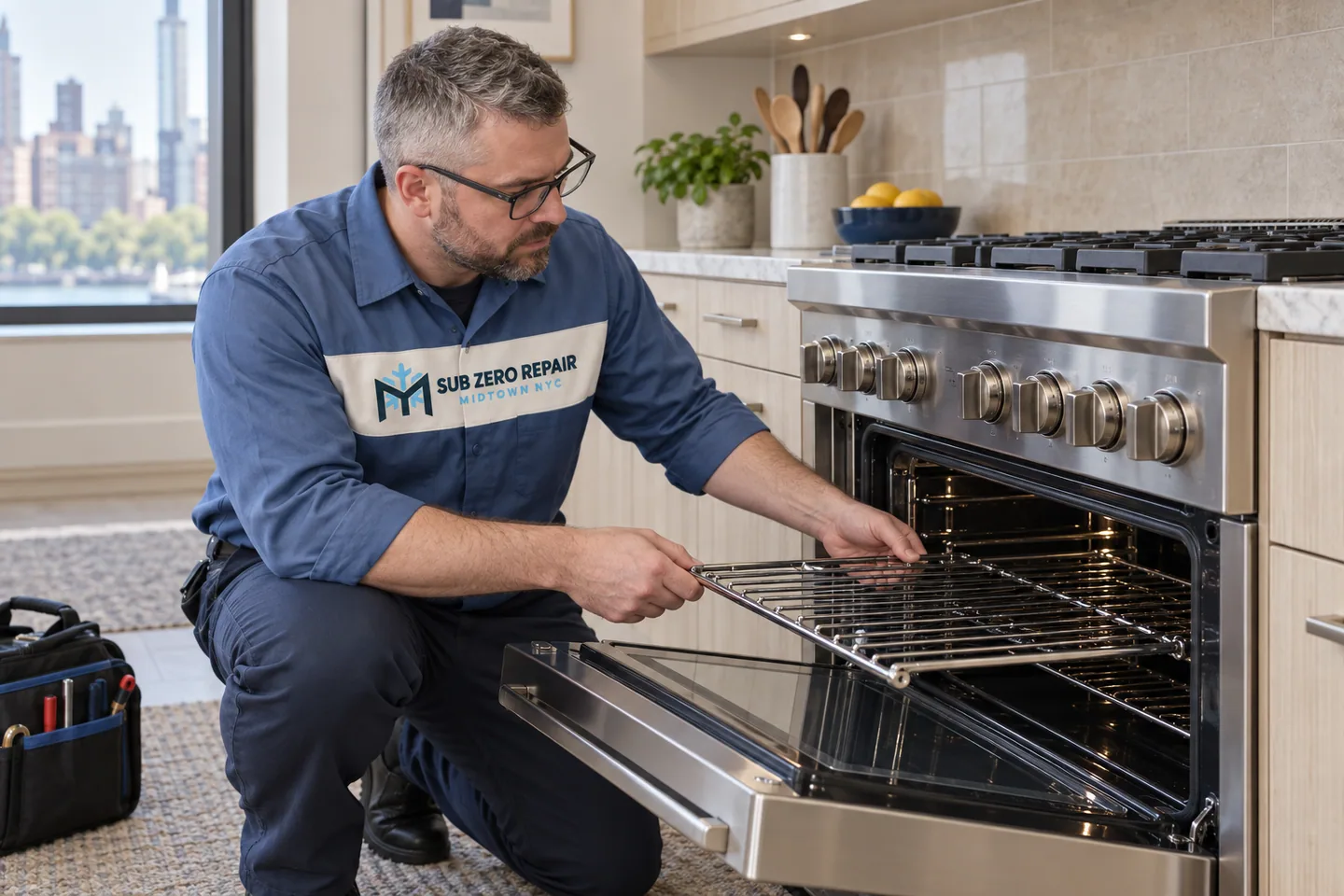
Avoid forcing a control that behaves differently
Tell us which control is affected and what changed during normal use. If a knob appears damaged or a door catches, stop forcing it. A control position, resistance or visible break can help describe the condition, but it does not establish what is happening behind the panel.
Keep loose pieces that have already detached, if safe, and mention them when arranging the assessment. Do not remove more parts to match an online repair example.
Include the heating symptom, if there is one
Explain whether the oven starts, reaches preheat or changes later in a cooking mode. Name any affected burner separately. If no heating problem was observed, say that rather than assuming one from a damaged-looking control.
The exact range model matters to both controls and cooking configuration. Existing owner paperwork can help when the label is not safely accessible.
Leave room without moving the range
For a Sutton Place apartment, tell us about fitted cabinets or limited space at the front. Clear movable objects and let hot surfaces cool. Leave the connected range and mounting hardware where they are until access is assessed.
Call to review your address, diagnostic charges and availability. The proposed repair is discussed with the person authorized to approve it after the appliance has been inspected.
A FEW HELPFUL ANSWERS
Before your service visit
Can I replace a knob myself to see whether the problem goes away?
Do not use a parts swap to diagnose a control problem. Follow the exact owner's guidance for removable accessories and discuss unusual operation before continuing use.
Does a door that feels heavy mean a hinge is broken?
That observation alone does not establish the cause. Describe the change and avoid forcing or removing the door before assessment.