
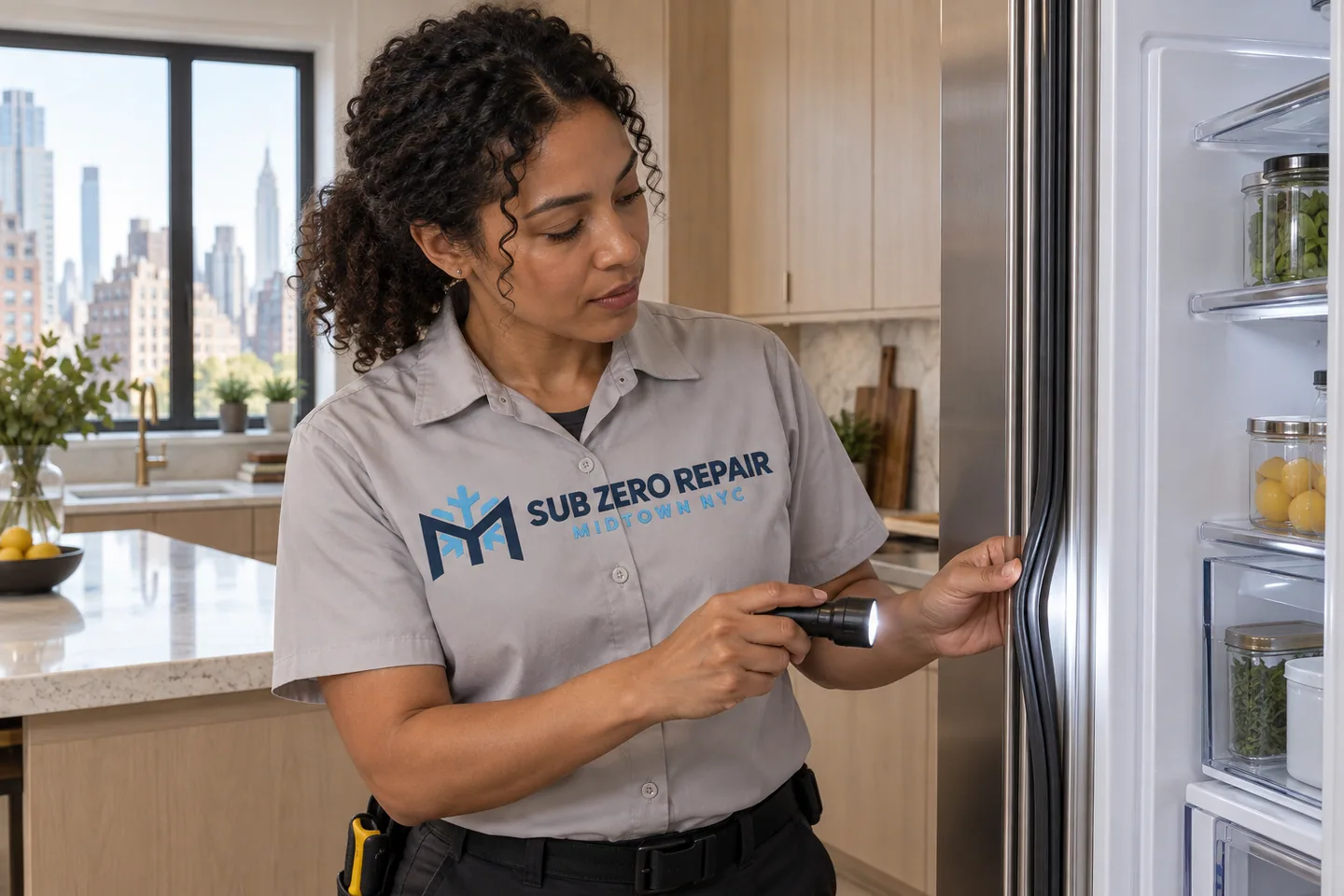
Start with the refrigerator you actually have
A refrigerator-freezer in one cabinet differs from a kitchen with separate refrigerator and freezer columns. Custom fronts can make the distinction less obvious. Describe the doors and compartments, then share the model from an accessible label or existing paperwork.
An operating freezer, interior light or fan is useful context, but it does not explain a warm fresh-food compartment. Keep those observations separate instead of treating one working function as proof that cooling is normal everywhere.
Preserve the change before adjusting settings
Write down the selected setting and any alert. Include a recent power interruption, installation or repair if it preceded the issue. Avoid repeated control changes that make it difficult to reconstruct the original condition.
Move an obvious loose obstruction from a door's path, but leave hinges, panels and internal covers alone. A built-in refrigerator should not be pulled from its enclosure to locate a hidden label.
Plan the assessment and protect stored items
If refrigeration is unreliable, arrange suitable alternative storage for temperature-sensitive contents. A booked appointment does not resolve that immediate need.
Call 212-540-2172 with the Midtown address and symptom. Mention building entry restrictions and discuss diagnostic charges before confirming a visit. The actual assessment guides any repair recommendation and parts proposal.
A FEW HELPFUL ANSWERS
Before your service visit
Should I order a compressor if the refrigerator is warm?
No. A warm compartment does not identify a failed compressor. The model, controls, closure and operating behavior need to be assessed before choosing a repair.
Is this the right service for a separate wine-storage cabinet?
Use the Sub-Zero wine-cooler service page for dedicated wine storage. Its purpose and operating guidance differ from a food refrigerator, even when both have matching panels.