
Map the problem to a control
Tell us which knob or control you used and what happened next. If the concern involves a griddle or another fitted cooking surface, identify that feature rather than calling it a burner. Include the full model so its actual configuration can be checked.
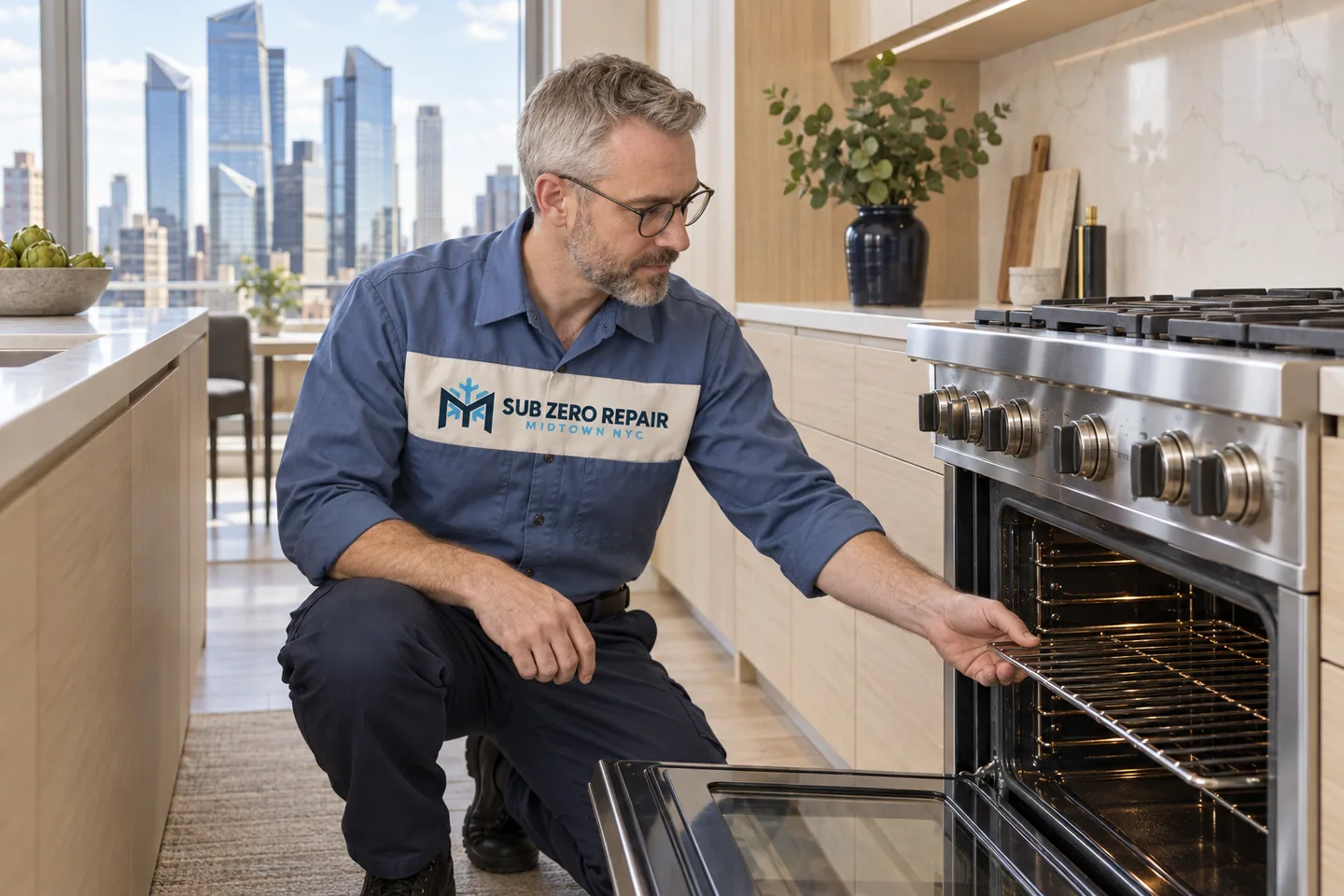
For an oven, note the cavity and mode. A problem with one section should not be automatically attributed to every other part of the range. Share what you observed during ordinary use without running more tests on an unsafe appliance.
Leave heavy equipment where it is
A wide range is not a unit to slide out for a quick look. Gas, electrical connections and installation restraints need appropriate handling. Clear the floor and nearby movable objects, but leave the appliance, panels and hardware in position.
If the concern is a door that binds or a control that feels different, report that separately from heating. An access issue can matter to the visit without being the cause of the cooking fault.
Bring the building into the scheduling conversation
At a Hudson Yards property, share any registration or service-window requirements before confirming a time. Ask about diagnostic charges and who should be available to approve proposed work. Neither parts availability nor a repair price can be settled from the range's width alone.
A FEW HELPFUL ANSWERS
Before your service visit
Can I measure the range instead of finding the model?
Approximate width can help describe the installation, but it does not identify the correct components. A model label or original paperwork is more useful when available.
Should I try lighting a burner manually if ignition fails?
No. Do not bypass a malfunctioning ignition system. Suspected gas odor requires leaving the area and contacting the utility or emergency services from a safe location.